Religion and Foreign Policy Webinar: The Russian Orthodox Church in Global Affairs
Event date
Speakers
- Andreja BogdanovskiFreelance Journalist and Analyst; Author, Divine Diplomacy, Substack
- Sergei ChapninDirector of Communications, Orthodox Christian Studies Program, Fordham University
- Katherine KelaidisDirector of Research and Content, National Hellenic Museum
Presider
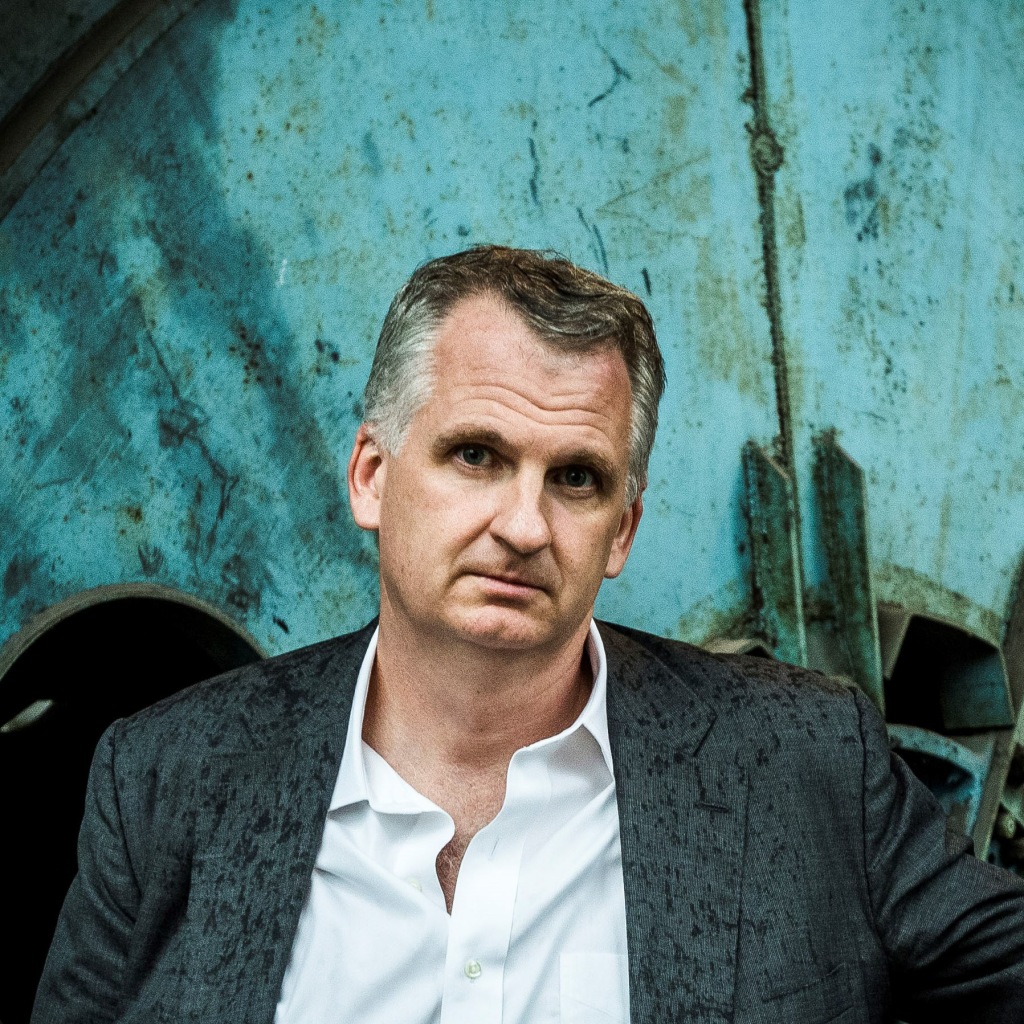
![]() Timothy SnyderSenior Fellow for Democracy, Council on Foreign Relations; Chair in Modern European History, Munk School of Global Affairs
Timothy SnyderSenior Fellow for Democracy, Council on Foreign Relations; Chair in Modern European History, Munk School of Global Affairs
From RFP Calls.
FASKIANOS: Welcome to the Council on Foreign Relations Religion and Foreign Policy Webinar Series. I’m Irina Faskianos, vice president of the National Program and Outreach here at CFR.
As a reminder, today’s webinar is on the record and CFR takes no institutional positions on matters of policy.
We have a distinguished panel with us today to talk about the Russian Orthodox Church’s role in international affairs. The moderator of today’s discussion will be Timothy Snyder. Dr. Snyder is a senior fellow for democracy at CFR. He is also the chair in modern European history at the Munk School of Global Affairs at the University of Toronto, as well as a permanent fellow at the Institute for Human Sciences in Vienna. His work focuses on Eastern European political history, Ukraine, American politics, and strategies for averting authoritarianism. And Dr. Snyder has authored sixteen books and coedited three more covering a range of topics including the history of Central and Eastern Europe, the Soviet Union, and the Holocaust.
I’m going to turn it now over Dr. Snyder to introduce our distinguished panel and to engage them in a conversation for the first part of this session, and then we’ll turn to you for questions and answers. So over to you, Dr. Snyder.
SNYDER: OK. Irina, thank you very much. And thanks to the Council and its staff for bringing three terrific people together for an interesting subject in global affairs, one that often eludes traditional approaches which focus on states and interests. I’m really looking forward to this conversation, so I’m going to keep the introductions brief and then head to a first round of questions. And then I hope for some exchange back and forth among all of us.
I want to mention just briefly that since we don’t have a Ukrainian on this panel it’s worth knowing, since the subject might not come around, that Ukraine is in its—in its demographics an Orthodox country and a country in which a very high number of people actually participate in church. So one of the things which is happening in the global politics of the Orthodox Church right now is that Orthodox believers are being killed in large numbers on the frontline in Ukraine every day. Which is—and a place that I see myself Orthodox imagery and Orthodox belief and Orthodox faith is precisely when I visit Ukrainian soldiers on the front. So that’s a moment of immediate context. We don’t have to stay close to it all the time, but it’s just—it’s a token of the world that we’re in and an important bit of background to the discussion that we’re about to have.
In alphabetical order, I’m very glad to introduce Andreja Bogdanovski, who has a Ph.D. from the University of Buckingham, and is an incredibly analytically sophisticated and wide-ranging journalist on the subject of church and state, and in particular on the subject of Orthodoxy and politics.
I’d also like to introduce briefly before I start the questions Sergei Chapnin, who has taken courageous decisions on behalf of his understanding of faith which has led him away from Moscow and to Fordham University, where he serves as the director of communications of the OCSC there. And he also serves as chief editor of the “The Gifts” almanac, Dary. He’s written a couple of books on the church in Soviet Russia and post-Soviet Russia, and the Orthodox Church in the world.
And our third participant will be Katherine Kelaidis, who has written a terrific overall and very personal history of Orthodoxy which I very much enjoyed. She’s the director of research and content at the National Hellenic Museum in Chicago, and is also a prolific journalist on these subjects particularly having to do with the politics of narrative inside global Orthodoxy.
So, speaking of the—of the—yes, you can steal that phrase if you want, if you liked it.
KELAIDIS: (Laughs.)
SNYDER: So, speaking of global Orthodoxy, I was hoping, Andreja, that you could help us begin by giving a sense—giving us a sense of how Russian Orthodoxy today fits into this larger complex phenomenon of Orthodoxy. And then in turn, perhaps leaning a bit on significant contemporary events, give us a sense of relationship between Orthodoxy or the Orthodox Church or churches and Catholicism. So, Andreja, the first voice is yours.
BOGDANOVSKI: Thank you very much, Timothy. It’s great to be here to be able to unpack this for you and everyone joining today.
A difficult question, really, to try to put it all in couple of minutes. But of course, as you rightly mentioned, so the first and foremost most important thing here is to understand that the Russian Orthodox Church is not the sole representative of Orthodoxy worldwide. Of course, it is one of the several Orthodox churches—depending on how you calculate fourteen, fifteen—autocephalous Orthodox churches currently, but it’s nonetheless one of the most influential and definitely the most numerous one when it comes to number of adherents, and in terms of power when you talk about global geopolitics and the role, really, of religion in it.
Of course, Orthodoxy, unlike the Catholic Church, doesn’t have a very strict hierarchical structure. There is no pope in the Orthodox world. You know, there is no Pope Leo, of course the new pope. But in the Orthodox world there is the title of the first among equals, reserved for the Ecumenical Patriarch Bartholomew, who is sitting in Istanbul, who is seen and perceived by many Orthodox Christians as a spiritual leader. But of course, because of the decentralized decision-making in the Orthodox Church, this is, as I say, more of a title rather than a signal of his hierarchical position.
When it comes to the position and how things are developing nowadays in more contemporary context, if you will, things need to go back, let’s say, to 2018-2019. This is where the Ecumenical Patriarch Bartholomew made a very big, important decision to grant Ukrainians the right to self-autocephalous church. And it’s been now seven years since the formation of the Orthodox Church of Ukraine, which received this status—or, tomos, as we call it, or decree of independence—by the ecumenical patriarch in 2019. This, of course, has created a massive headache between Moscow and many of the Orthodox churches because Moscow considers this to be encroachment into its own canonical territory. And ever since there is a stop of communion between Moscow and Constantinople and other Orthodox churches. And this is a major point of contestation between even nowadays, as you will, because you will see that the rights of the Ukrainian Orthodox Church and the status of the Ukrainian Orthodox Church is now featured in the peace proposals that are being circulated back and forth between Moscow, Kyiv, and Washington of course.
So it is a very important issue, one that of course Rome and the Catholic Church is very much interested in, you know, pursuing peace. Pope Leo met Zelenskyy three times alone this year since he got elected as pope. So you can see that there is so much interest among people in the Vatican to pursue peace and to see how they can facilitate this process forward. You remember the pope several times offered the idea of hosting Putin and Zelenskyy for peace talks. This, of course, was rejected by Russia’s Foreign Minister Lavrov, who described this as—this proposal as inelegant. So a lot—a lot to unpack here. Of course, the Vatican is extremely focused on prisoners of war, securing their right of return to Ukraine, and also as well as return of kidnapped Ukrainian children back to Ukraine.
So I’ll stop here, but I’m sure we’ll have a good discussion forward.
SNYDER: Just a very quick follow-up, Andreja, if you would. Could you—would you mind clarifying for our audience what it means when you say that the Moscow Orthodox Church is no longer in communion with other Orthodox churches? That’s a technical term which I’m sure many understand but perhaps not all.
BOGDANOVSKI: So because of the geopolitical magnitude of how Moscow perceives this, they perceive it as an attack on its rights—as they call it—on its own canonical territory as they describe it, the territory of Ukraine. They say that the Ecumenical Patriarch Bartholomew should not have intervened and should not have granted Ukrainians autocephalous church. This is when they used this as a weapon. First it was a threat that if Bartholomew does so they will stop commemorating, for example, him during liturgies, and they actually did it. So, since 2019 they’ve cut communion with the ecumenical patriarchate, but also Church of Greece and I think Church of Alexandria as well, the Patriarchate of Alexandria as well.
SNYDER: OK. Very good.
A couple of basic historical points of background that folks might know or might not. One is that the tradition of Orthodoxy, or rather of Christianity in these lands begins with a conversion in Kyiv. And the second is that since 1772 at the latest the argument that a Russian state must protect the Orthodox has been used as a justification for military intervention. This is a very old association.
So, speaking of the—of the deeper history of Orthodoxy, Katherine, very glad to have you here. I very much enjoyed your book. I was hoping that you could help us with some other global connections as you wish, but a particular interesting theme that emerged from your book—and perhaps an unexpected one for some of our listeners—would be the elective affinity, if one could call it that, between some American missionaries—Evangelicals, Protestants—with the post-Soviet Russian Orthodox Church as it emerged in the 1990s and some of the deeper connections that have emerged since then. That is certainly an example of the Russian Orthodox Church playing a kind of global role.
And relatedly but I think distinctly, also interesting, I think, to many of our listeners would be the phenomenon of how Orthodox churches in the United States, and North America, and elsewhere have changed from becoming—from predominantly émigré churches to churches with converts, and how that might have mattered politically or that reflects politics in North America or wherever else you’d like to discuss it. Thanks.
KELAIDIS: Yeah. So, first, thank you so much to the Council. And, obviously, being on—among these panelists is a compliment to anyone.
So, yeah. So Orthodoxy in—because of the sort of diffuse governance method that Andreja pointed to, Orthodoxy in countries where it had not been the state church, right—where it didn’t have this historical tie to the state—the way that it arrive there was largely through—was largely through immigrants, and as a consequence arrived in this sort of haphazard way, one might say, right? So where state churches has had very clear lines of governance and authority, oftentimes in the case of, for example, North America you have—we have an Alaskan mission—you have a Russian mission in Alaska from the eighteenth century when Russia held colonial possessions in Alaska. And then you have immigrants coming and bringing their local churches. And oftentimes, you know, just riding home to the village for a priest, and a priest shows up, and he’s under obedience to the bishop from the place he came from, right? It’s not necessarily organized in any concrete way.
And in the case of North America, you have this sort of very particular situation where you have this Russian imperial mission church, the Russian Metropolia—the Russian Metropolis—and then you have these immigrants arriving largely from the Ottoman Empire who are ethnically Greek and Arab. And in the first part of the twentieth century, there’s—you know, this works somewhat well even though they’re still sending home for their village priest. And then, by the Russian Revolution, obviously, you have a big problem. And the Orthodox Church—the institution called the Orthodox Church in America is sort of the—is the descendant of that Russian mission church in Alaska. And then the other jurisdictions in America, the other institutional Orthodox churches in America, are very much the product of this immigrant experience. So you have that. You have that kind of conflict just sort of built in—built into the DNA of the—of Orthodoxy in America and anywhere, once again, where it has not been historical—has not been the state church, has not been a historical church.
In the past forty years, you have also had—you know, certainly from the fall of the Soviet Union you have this growing affinity between the Moscow Patriarchate and American Evangelicals. Of course, the idea of converting or Christianizing Russia is near and dear to American Evangelicals throughout the Cold War period. No comment on that, I suppose. But when the Soviet Union collapses, you have a fairly impoverished church. And the extent to which American Evangelical money helped, you know, sustain the Moscow Patriarchate in those initial years after communism I think is sort of an underexplored topic.
At the same time, you know, a decade before, beginning in the 1970s, you increasingly have in North America and to a lesser extent Western Europe political and theological conservatives who are disenchanted with changes in their own traditions—in post-Vatican II Catholicism, certainly the liberalization of the Anglican tradition, particularly the Episcopal Church in America—you have them start to come into Orthodoxy from these traditions. And in recent years—and they come in—I think it’s important to note they come into those institutions predominantly or increasingly where English has become the language of the liturgy. So when you look at conversions in North America today, it’s not even across the board. The OCA, that— the old Russian Metropolis Church—and the Antiochian Orthodox Archdiocese, which is—you know, was culturally Arabic but has allowed liturgies in English and has—you know, most of their liturgies today are predominantly in English—those are where people are coming into the church, right, now increasingly parts of ROCOR.
But in the Greek Orthodox Archdiocese, which remains the largest institutional Orthodox church in America, you don’t have as many converts. You have some, but the liturgy continues to be partially in Greek and partially in English in most churches. That calculus changes from parish to parish. And the church has remained fairly ethnically Greek, right? There’s still Greek school taught in the church basement. You can go to Greek dance class on Wednesday. It’s Greek. That has—that has, then—what that’s done is it’s changed the immigrant—I guess the immigrant versus nonimmigrant identity balance in American Orthodoxy.
Since the pandemic, what has been, I think, you know, for all intents and purposes relatively a trickle of conservative converts into—politically conservative converts has exploded. And you’ve seen a lot of—I think there’s been a lot in the New York Times. The AP had a story about these converts. I’m of the opinion that a lot of the conversation around these converts is—well, A, I think it’s—you know, numerically it’s slightly overblown. But I also think we might be asking the wrong questions.
So I think there is a very clear narrative in sort of American politics about disenchanted young men, and the story of the conversation we’re telling fits well into that. I think that there is this larger conversation to be had, and an older conversation, about people from non-Western religious traditions coming into Eastern religious traditions—I think you saw this among, you know, the beatnik Buddhists in the ’60s; you see this among Western converts to Islam—and what’s going on there. I think that’s probably the deeper issue.
So, yeah, I’ll stop there.
SNYDER: OK. Thank you, Katherine.
So, Sergei Chapnin, I’m very glad to have you in the—in the post position here to ask what is perhaps the key question or the main question of this discussion. I remember when I studied the history of religion one of the—one of the fundamental questions was, of course: What is the church? Or, posing it a different way: Who is the—who is the church? And I’d like to ask for your reflections about that with—in connection to the Russian Orthodox Church of today, because we’ll be familiar with the long history of its close relationships with various kinds of states, and of course in its present form its present leader is very closely connected with the leader of the Russian state. And so that’s one side of the issue. But given your books and given your own experience, I’d ask—like to ask you to reflect on the question of: What or who is the Russian Orthodox Church?
CHAPNIN: Yes. Thank you for the invitation and thank you for this question. I think it is important.
We all know that Russian church is not going to disappear any time soon. So the real question is kind of both for policymakers, and for the churches, and for the Russian church itself how to deal with it both inside Russia and beyond its borders. And I think the—one of the kind of strange perceptions is that Russian Orthodox Church considered to be a monolith, but it’s not a single actor and I think we have to distinguish at least three realities.
And of course, the first one is the institutional church. That’s the Moscow Patriarchate leadership, including and first of all, of course, Patriarch Kirill. And as Patriarch Bartholomew told this Council three months ago that Patriarch Kirill giving a ringing endorsement to Putin’s invasion in Ukraine, and this is—and there is a big discussion about that—why that happened. I will come back to that, but let me first name the other two groups.
So, second are the ROC religious activists of different kind, a spectrum from enthusiastic nationalist supporters of the war in Ukraine to courageous antiwar dissidents.
And the third group is the, let’s say, ordinary believers, whose views often diverge from official positions but they are mainly silent. And I think this is important that this silence does not automatically mean total support for state propaganda.
So this reality matters because it shapes how we read Russian influence abroad and whom we treat as partners or opponents, potential allies or sometimes spies in kind of Russia and outside Russia in Russian diaspora.
So, of course, the most kind of vocal and the most problematic group is the leadership—the official, the institutional church—because there’s a real shift within—both kind of pastoral theological geopolitical shift connected with the ideology of Russkiy Mir, the Russian world ideology, which kind of promotes the—kind of the idea of spiritual or even metaphysical battle with the West, and in general provides—or, this Russkiy Mir ideology provides a kind of clear theological framework for imperial expansion of modern Russia, of Putin’s Russia. So this is important to keep in mind, that in fact in the Russian Orthodox Church ideology—well, first, history—and we know Putin loves history—and then ideology actually replaced theology.
So this is in a way a unique situation, and I think this is connected to the problem that Russian Orthodox Church experienced in the twentieth century. It was kind of almost eliminated. There were underground parishes. There was leader since 1940s, the official church that was recognized by the Soviet—by the Soviet state. And once Soviet Union collapsed, there was a genuine religious revival in—well, in the late Soviet Union or kind of Russia/Ukraine/Belorussia. And the problem was that there was a democratic movement that finally was suppressed by the hierarchy by mid-’90s, and the church started to develop in its usual way, in a kind of pro-imperial way. And this is what we have now.
And this kind of imperial ambition, both of the state and of the church, are expand into Africa, and we have non-canonical—we should say non—or, parallel jurisdictions of Moscow Patriarchate in Africa in dozens of countries, so it’s a huge effort. Then there are also kind of the sort of missionary efforts in Asia. And of course, we have—and Katie mentioned that—the conversative international, so-called—the network of conversative Christian organizations that covers Russia, Western Europe, and America.
And also, it is—we should keep in mind that Russian Orthodox Church is not in isolation. It is supported especially by the Serbian Orthodox Church, Bulgarian Church, the Antiochian Church in Syria and Lebanon. So the reality is very complex.
And of course, these efforts, that are supported politically and financially by the Russian state, they bring kind of poison fruits. And we see that many are—many conservative—groups of conservative Christians, not necessarily Orthodox, they are in favor of Russia as a defender of traditional values. So that’s actually Russia and the Russian Church managed to sell this idea of traditional values and Russia as a preserver of these traditional values to the West.
Now just one more thing I should say about persecution and dissidents. We have a huge persecution campaign of dissidents—political dissidents and religious dissidents in Russia today, with thousands—literally thousands—imprisoned. And the repressions against religious leaders are basically against from more than a hundred persecuted. Eighty percent are Russian Orthodox, and some of them left Russia. And I think this is an important group within the Russian Orthodox Church. Let’s call them new religious dissidents that are both in Western Europe and in America. And I think for me this is a seed of hope, because if we consider the—kind of the vast majority of the Orthodox Church in Russia kind of pro-imperial, then—and we know that—(laughs)—the Russian Church will not disappear. So what will—who will be the agent of the change? And I think this small dissident group outside Russia could play an important role in this process.
Thank you.
SNYDER: OK. That’s wonderful. Thank you, Sergei.
So we’ve got—we’ve got a couple of minutes just for a round of general reflections, and so I wanted to see if any of you wanted to react to anyone else. And in particular, I wanted to see if we could draw things to a point on the question of the Russian Orthodox Church and global affairs. So if there’s—if there’s one thing that you think we might have overlooked, or which needs emphasis, or which we could perhaps formulate as a strong thesis before we can begin discussion regarding the Russian Orthodox Church and global affairs, what might that be? Or if there’s just anything that you would like to react to to set us up before we move into the more open part of the discussion.
Again, Andreja, I’ll start with you. And of course, an acceptable answer is I have already said everything that I wanted to say and I formulated it exactly as I wished to the first time. But please, take a minute if you’d like.
BOGDANOVSKI: No, thank you. No, I agree with everything that’s been said here by the previous panelists.
Of course, you know, Russian Orthodox Church, it’s a massive entity and it’s multilayered, as Sergei mentioned. However, when it comes to its interaction on global affairs, of course, the Russian invasion of Ukraine takes away a little bit of the power and the ambitions it used to have in previous years. But this is not to say that it has completely diminished these projections, and that it has completely focused solely on the Ukrainian Orthodox Church or developments in Ukraine.
In contrary to that, we’ve seen, as Sergei mentioned, how it has expanding influence on the African continent. It’s using this idea that because the Patriarchate of Alexandria recognized the autocephaly of the Orthodox Church of Ukraine, now it has the right to also usurp—go against the Patriarchate of Alexandria’s canonical territory. And we are now seeing figures such as Russian Orthodox Church is being expanded in many different parts across Africa. I think the latest stats showed something around thirty-six countries with over 250 priests, and so on and so forth. So we have this ongoing situation of utilizing in a way Orthodoxy as a cover, a soft-power tool, in the regions across Africa.
However, as in Europe, we are seeing different developments, in Eastern Europe especially. Whether it’s through the Baltics and Estonia or going in Ukraine and Moldova, we see sort of, like, crumbling down of the Russian Orthodox Church networks across these countries because of the Russian invasion of Ukraine. But we see the opposite in Southeast Europe and the Balkans, where the Russian Orthodox Church is gaining on more sympathy, strengthening its foothold, and it’s gaining more sympathy among Orthodox believers and, of course, people in governments close to Moscow. So the Russian Orthodox Church, of course, is there to stay, in the sense of it’s still going to be trying to project power on the global stage?
SNYDER: Great. Katherine.
KELAIDIS: Yeah. I think—just to sort of reiterate what Andreja and Sergei said—I think it’s really hard to underestimate the role of the Russian Orthodox Church in Russian soft power around the world. And particularly the way that, you know, the Russian Orthodox Church has been a way for the Putin regime to lean into this view—this sort of self-mythologizing as a defender of tradition, and traditional values, and Christianity, not just in Russia but around the world. So I always think about the sermon that was given on Forgiveness Sunday, sort of the gateway to Lent in the Orthodox tradition, the year of the Russian invasion.
So really, weeks after—a week after the Russian invasion of Ukraine. In which the patriarch of Moscow gave a sermon in which he said that, you know, the invasion of Ukraine was necessary, you know, in essence—I’m paraphrasing—but, in essence, to protect Ukraine from gay pride parades, right? What the Russian Orthodox Church and its relationship to the Putin regime has done is it’s allowed the Russian state to curry favor with conservatives and reactionaries around the world. And I think that’s a really important job for the church in global affairs.
SNYDER: In Sergei’s formulation, that we have ideology instead of theology, strikes me as very important here, because when you have ideology rather than theology it opens the gates for the highest-ranking leaders of the Orthodox Church in Russia to say extraordinary things, let’s put it that way. Things that one would find difficult to reconcile with the teachings of the Bible, to put it in a—to put it in a restrained way. Sergei, is there a sentence or two you’d like to add, before we open it up to the broader discussion?
CHAPNIN: Yes. I will continue this line also, because magic is also involved, I believe. And I mean a very strange thing. That our Russian Orthodox Church is the biggest Orthodox church in the modern world. And this the size has its magic. So I feel that lots of churches and ecumenical organizations, well, including the Vatican, actually, are not that happy to kind of criticize sharply the position of the institutional church, especially towards the war, because of that. Because they feel that, well, if it’s a big Christian community, they should—or other churches, in a way, should stay in touch, and are in even in good—should be in good relations with this kind of big Christian community.
And I think that plays a kind of bad role in our—in the whole situation. They cannot—churches—I would say only Patriarch Bartholomew is kind of constantly criticizing and explaining—actually explaining what’s going on with the Russian Orthodox Church. Other churches are keeping silence, not just orthotic churches, but also Catholic Church, Protestant churches, the World Council of Churches. And I think the only exception is the statement that was made last week, three and a half years after the beginning of the war—of a full-scale war—Council of European Churches made a very strong statement condemning the ideology of Russkiy Mir, and calling it almost heretical, which is a kind of—well, and that’s the new page in this sort of our presenting the these kind of views, because in the ecumenical dialogue, well, for decades now, no one uses the word “heresy.” And you can find it twice in this document. So it’s very important.
SNYDER: Yes. And perhaps refreshing. Thank you all for taking part in this part of the conversation. If I understand matters correctly, we will now be switching over to the second stage and another format, in which we will be gathering questions from our very large audience. I think if you look at the chat, Samantha Chang is giving you instructions about how you could pose your questions. And I believe—Sam, am I right that you will be taking the questions and passing them on?
OPERATOR: Yes, that’s correct.
(Gives queuing instructions.)
We will take our first question from Lauren Homer. Please accept the unmute prompt.
Q: Thank you. Hi, everybody.
I had asked a question earlier which I think was probably covered to some extent. But I’m wondering how the Russian Orthodox Church, Moscow Patriarchate, can keep claiming that Ukraine is part of its canonical territory when, under the Russkiy Mir doctrine Ukraine does not exist, and Ukrainians are all Russians—as well as Belarusians. They’re all Russian too. And the church actually went so far as to set up a division to establish internment camps where they could brainwash Ukrainians who had the temerity to consider themselves not Russian, if they were captured.
SNYDER: So we don’t—Sergei, did you want to take that one?
CHAPNIN: Yes. Thank you. It’s not an easy question. And I’m afraid I cannot give a kind of good answer in two, three minutes. But what is important is that our church history is really long. And you can—you can find lots of things to justify almost any canonical decision that is made today. So my understanding is that there is no problem in two parallel jurisdictions in Ukraine, generally speaking. We have, I don’t know how many, ten parallel jurisdictions in the United States. And the question is, when there is cooperation, when there is mutual recognition and respect, it works well.
And only in the historically Orthodox countries we have basically one Orthodox church. But that could be changed. And, I mean, like, we should say that in the Ukraine we have three Eastern European—or, Orthodox traditions today. This is not just the Ukrainian Orthodox Church and Orthodox Church in Ukraine, but also Ukrainian Greek Catholics. They are also a part of the Eastern Christianity, preserving the Byzantine rights, the Orthodox theology. And this is important just to keep in mind when we try to assess what’s going on.
And we can—as I believe that it’s impossible to resolve the situation of two parallel jurisdictions within kind of next, say, fifteen, twenty years, at least. So the most important thing is to remove all claims that we are the only canonical jurisdiction and just recognize and cooperate. I think that’s the most important thing today.
OPERATOR: We will take the next question from Thomas Uthup. Please accept the unmute prompt.
Q: Hi. Thank you for taking my question.
My first question—I’ll stick to that. We can come back. My first question is very specifically for Dr. Kelaidis. And she alluded to this very important aspect of the relationship between U.S. Evangelicals and the Russian Orthodox Church. And I was wondering if it was—that relationship is reinforced by their ideological or cultural perspectives on Islam, gender issues, sexual orientation. Because I see the same thing happening with the churches in Africa and U.S. Evangelicals. Some of the Evangelicals have the same perspectives as many of the African churches do. And they have been funneling quite a bit of money to the African churches because of that. So if you can tell us a little bit more about that relationship, and that would be great. Thank you.
KELAIDIS: I should probably send you a check, because this is the subject of my next book which will be out late next year with Bloomsbury. So your check is in the mail.
I absolutely think that gender and sexuality, in particular, to a lesser extent their views of Islam, but certainly their attitudes about gender and sexuality govern this relationship. One could argue, above everything else. And I think that that’s possible because of two things. One, the extent to which gender and sexuality have become a proxy for all other theological and political beliefs in our discourse, which is, you know, a little bit odd if you sit down and think about it for a moment. And, secondly, because of the way—and this goes back to them being a proxy in some ways—because of the way the emotional—you know, people’s emotional response to change, to post-modernity, however you want to put it, is really encapsulated in these issues.
You know, particularly around, you know, same sex-couples, same-sex relationships, around the rights of women. And so, you know, you have instances where this becomes the issue for people, not just politically but theologically, right? People leave their faith traditions over things like the inclusion of LGBT people, over things like the ordination of women. And so absolutely. This has been—you know, we’re split apart over these issues. And the Russian Orthodox Church and the Putin regime, I would say, has certainly been a beneficiary of that kind of division.
OPERATOR: We will take the next question from Dr. Azza Karam. Please accept the unmute prompt.
Q: Thank you very much, indeed, for these excellent presentations. And I’m delighted to be able to follow Thomas Uthup with that brilliant question. And thank you so much, Katherine, for your expose. But, really, thanks to all of you. My name is Azza Karam. And I serve as a president of Lead Integrity and also a professor at Occidental College in L.A.
My question is to each of you. If you were to summarize the impact, influence of the Russian Orthodox Church on foreign policy—not just in Russia, but on trends in foreign policy globally, what would your descriptors be?
SNYDER: Dr. Karam, maybe you could clarify for the panel what you mean by “descriptor.”
Q: In other words, how would you describe the impact? Obviously, you can’t give another presentation, much as one would love to listen to all of you, but in—what would your terms be to describe the impact of the Russian Orthodox Church on foreign policy globally? How would you describe that, in whatever words you wish to choose? That’s the question. Thank you.
SNYDER: Andreja, perhaps you could go first, just because the other two have had questions directed to them. So maybe you could just begin—
BOGDANOVSKI: Yeah, I think Katherine wanted to start off.
KELAIDIS: No, no, please. Please, please go.
BOGDANOVSKI: Well, what comes to my mind is—which is a very fascinating question—is this rise of populist movements across Europe in the West, and how the Russian Orthodox Church is trying to project its power by amplifying this traditionalist messaging, and projecting itself as a bastion of keeping traditional orthodoxy versus the evil, decaying West, as they frequently refer to. So this is just going to be on the rise, where the church is just going to gain more influence, I’m afraid, so. If the idea of the question was to give a very sharp and concise answer, I hope I managed to do that.
SNYDER: Would the other two of you like to venture a response as well?
KELAIDIS: Yeah. I mean, I don’t know. I think that one of the things that, certainly this sort of image of Russia and Russian Orthodoxy maybe as this defender of traditional values, has done, is it’s allowed to give the smoke screen of—I’d say, smoke screen, right? It’s allowed to create a smoke screen of an ideological conflict in what is really a, you know, sort of old-school, great game-esque conflict. This is about—you know, this is about power. This is about Ukrainian oil, for example. It’s about African resources. And that conflict, that rush for resources—almost, you know, neo-imperial rush for resources, can be smoke screened as a conflict of values.
CHAPNIN: Well, I would add that, if one word—in one word, fundamentalism. Orthodox fundamentalism is kind of fueled by these traditional values, or blah, blah, blah.
And the kind of—the general—I mean, what does that mean. kind of, to be a fundamentalist? That means kind of very Soviet and very kind of KGB-style thing, is that, first of all, you should know well your enemies. So you should say it’s not that important that you have friends, but it’s important to know your enemies. So this is what this distorted or ideological and so-called Orthodox tradition suggested to the rest of the world. Look for the enemies first, and fight them. And this is what all these conservative groups are doing. And they were happy to get this big ally as Russian church and Russian Federation today.
OPERATOR: We will take the next question from Elizabeth Prodromou. Please accept the unmute prompt.
Q: Thank you very much. Thanks to all the speakers. I really appreciate your insightful comments.
I’d like to focus on the policy dimensions of what you’ve been presenting, and in particular, Sergei, your very astute and precise deconstruction of the institution of the Russian Orthodox Church. So I wonder if you could—any of you could suggest what are ways to actually amplify the dissident voices amongst lay activists, as well as priests and the few hierarchs who oppose both the war in Ukraine and certainly the—you know, the distortion, the heresy according to many, of Russkiy Mir. What are the policy spaces and mechanisms by which those dissident voices can be amplified?
And then secondly, also on the policy dimension, I wondered if you could comment about the tendency of the religious freedom community to support laws in Latvia, Estonia and Ukraine that limit religious freedom in terms of the Moscow Patriarchate churches. This is a descriptive and legal question, not a normative question. But which oftentimes have the unintended consequence of allowing states to interfere in the internal function of churches, number one, and, number two, reinforce the Moscow Patriarchate’s narrative of good, evil—good Moscow, bad West. What would you say to the religious freedom community in advising governments about these laws and their unintended consequences?
SNYDER: OK. I mean, Sergei, you don’t have to raise your hand. You can just answer.
CHAPNIN: (Laughs.) OK. Yes. Thank you. Thank you, Elizabeth, for joining us.
And, well, as for the dissident community, this seed of hope, I think the most important thing is to support it, because there is kind of real, kind of, silence among our official churches in the United States and Europe, with one exception. And I think it’s important to put pressure on different religious institutions, like NCCC, or our kind of local or Orthodox churches here. I attempted, actually, to start a campaign before the All American Council of the Church in America to support Russian dissidents. I got kind of hundreds of signatures under the appeal, and we failed. And a month after, that was in June-July, and in mid-August, one of the hierarchs of the Orthodox Church in America met with Putin. So that wasn’t just coincidence that our appeal was rejected. And then the clear sign that our bishops of the Orthodox Church in America enjoy their close contacts with Putin personally was kind of revealed publicly.
So, first of all, our kind of—I think we need public support. We need space for both presentations, lectures, and prayers. And, I should say, that I wrote a report, The Religious Community is Under Pressure, documenting religious persecutions in Russia. And I’m trying to kind of present it in different—I was in Rome two weeks ago presenting this report there. So but still, well, it’s comfortable not to notice that. So we should make that our kind of—let’s raise this public awareness about that. The second thing, I think, is the kind of—the personal weakness. Because we have both in Europe and in the United States Orthodox clergy, Protestants, and others who are designated as foreign agents, or even terrorists. And let’s invite them, or let’s ask them to speak. And maybe—well, let’s do—let’s do prayers, ecumenical prayers for those persecuted in Russia. It’s really high time for that.
OPERATOR: We will take the next question from Kirsten Guidero.
Q: Hello. I’m Kirsten Guidero. I’m the ecumenical and inter-religious officer for the Episcopal Church.
I put my question in the chat, so it is there written for you as well. I would just love to hear comments from any of you—and, by the way, webinar has been incredibly informative and helpful. So thank you all so much. But I’d love to hear a little bit more about this odd ecumenism seeming to bind together Evangelicals and other more disaffected conservative Christians globally with Orthodox, despite the fact that they have extremely different understandings, theologically, of things like the bedrocks of Christian faith. Like, how do you handle scripture? What your Sunday liturgy should look like? What’s your ecclesial authority, structures, and, et cetera, et cetera. How long do you think this alliance will hold? Where’s it going to go from here? And what might be some good ways to challenge it?
KELAIDIS: I have some thoughts on this. And I’ll say that I find the whole thing a little bit amazing, in part because one of the hats I wear is as the editor-in-chief of the Journal of Anglican and Eastern Churches—of the Society of Anglican and Eastern Churches. And when people want to write me hate mail, one of the first things they point out, other than my support of LGBT rights, is they call me an ecumenist, right? That’s the insult that a lot of reactionary Orthodox Christians throw at you.
I think that this goes back to sort of my point, my current bully pulpit, about the ways in which, particularly these issues of gender and sexuality, have blinded people. And in this I would include a lot of, like, sort of rank and file Christians. I think it’s being manipulated by leadership. But I think for many people sort of in the trenches, it’s they’ve just been blinded by these issues to ignore what were very serious theological problems for them. And this I would really trace to the origins of the American religious right, and the ways in which the American religious right—with its base around white Evangelicals—were able to overcome their real antipathy for Roman Catholics, to invite Conservative Catholics into that alliance, and into that allegiance.
And I think it goes back to what Sergei says about the replacement—in many ways, I think we live in a—even the most religious—you know, publicly religious people live in a post-religious age, in that you’ve had this sort of, something I would characterize as almost atheistic, replacement of theology with ideology. And so how I view scripture, how I view the liturgy, how I view the Eucharist, how I view the veneration of the Holy Mother, none of that is as important to me now as what I think about same sex marriage and abortion.
CHAPNIN: Yeah, I agree, actually. That’s the—we have to forget about the ecumenism of the twentieth century. This is something completely different. And maybe, I don’t know what should be—how it should be called, but it’s kind of a secularized ecumenism of these conservative networks.
OPERATOR: We will take our next question from Jonathan Benthall. Please accept the unmute prompt.
Q: My question is, how organized is opposition within the Russian Orthodox Church to the Moscow patriarch’s support of the so-called special military operation? And in particular, is there any explicit opposition by disaffected hierarchs?
CHAPNIN: No. There is no opposition are within hierarchy in Russia itself, or at least are they are silent. They belong to this kind of silenced community. And I think it’s important to keep in mind that, since Soviet times, there are two types of silence in Russia. You can be silent against or you can be silent in favor. So it’s just like that.
As for the rest of the community, dozens of priests were defrocked just for kind of refusal to read the prayer of the victory of holy Rus, so-called, new prayer introduced by Patriarch Kirill. Or for their anti-war—kind of public anti-war position. And you don’t need to kind of—to persecute kind of hundreds or thousands now. It’s OK when you persecute a few dozens and make this public, that the signal will be perceived. So the anti-war community in Russia is kind of—is silenced today. And we cannot—there are no kind of research on that, so—and it’s quite difficult to say how big is this anti-war Christian community in Russia. What we can say, it definitely exists.
KELAIDIS: I just—obviously I don’t have much—don’t have much to add when Sergei speaks. But I will say that I think that, you know, something that I found frustrating is the extent to which the Western press is very interested in a handful of—you know, I mean, a statistically relatively insignificant number of young men converting to Orthodoxy out of these reactionary political traditions in the West, and the very little attention that’s been paid to dissident voices within the Russian Church and the wider sort of Russian sort of political space, and Russian dissidents. Obviously, Alexa Navalny, these big figures, but the extent to which there’s a real sort of dissident movement has been, I think, ignored. The magnitude of that has been ignored in the Western press.
OPERATOR: We will take our final question from Lauren Homer.
Q: Thanks very much.
I wondered if any of the panelists would be willing to comment on what I see as a relentless Russian propaganda campaign trying to persuade people that Ukraine is persecuting Christians. That has had a huge influence on the Evangelical community in the United States. And despite our best efforts, it continues to be propagated, when it’s really about Ukraine wanting to shut down one legal entity of the Ukrainian Orthodox Church because it is affiliated with Moscow.
CHAPNIN: Yeah. OK. Well, I think the problem is there. I mean, there are problems with this. And that’s, like, what Elizabeth asked, and I’m sorry I forgot to answer this question. Yes. There is a big problem with all these new laws in Ukraine, Estonia, and, where else? In Baltic states. And we don’t have a clear answer to that, because they are the security concerns behind this new legislation is clear, but the kind of the wording and the implementation of this laws, they cause lots of problems. So I think when the world is kind of divided, and we would like to see this—to say this is definitely black and this is definitely white, there are situations when we cannot say that. And I should say that, yes, unfortunately, the campaign against the Ukrainian Orthodox Church is a campaign against the religious community. It’s not just the campaign against those within the community who support this ideology Russkiy Mir, or promote, whatever, canonical relations with Moscow.
No. There is a problem there. And I think we should take courage and speak about that, that, yes, there is a problem with religious freedom in Russia—in Ukraine, unfortunately. But we shouldn’t put kind of—it’s not just period after that. We should put comma. And much more persecutions are on the occupied territories of Ukraine. There are prosecutions in Russia itself. Also there are prosecutions in Belarus. And all that is somehow connected to the Russian Orthodox Church Moscow Patriarchate. So I think we are—when we focus only on Ukraine and we try—we try to present that persecutions in Ukraine as something exceptional, well, it’s not. All this, we have them everywhere. But this—and the scale is much more dangerous outside of Ukraine.
SNYDER: Yes, go ahead.
KELAIDIS: I’d just like to sort of reiterate that, and say that, you know, I think this is where nuance is important, and where it’s been completely lost in our public discourse. I think particularly to Evangelicals, who have—you know, Western Evangelicals who have latched on to what is, I think, you know, genuine problems with religious freedom in Ukraine, as a reason to abandon Ukraine, for example. I mean, they are—they’re also ignoring—the persecution, for example, of a lot of low-church Protestants in Russia, right? Persecution of Baptist communities, for example, in Russia. There you’re there are no angels and villains and devils in the real world, I think is the problem.
SNYDER: Or there might be—there might be different sizes of angels and devils in the real world.
KELAIDIS: Exactly, yeah.
SNYDER: I mean, I think Sergei’s point about the hierarchy of this is very—is very important. And perhaps this is the note we’ll close on. It is messy and difficult, and I appreciate Sergei’s attempt at nuance, when there are rearrangements of church institutions with the application of state power. That’s absolutely correct. At the same time, that is a different quality than the persecution of dissidents within the Russian Orthodox Church, not to mention of other religions. As usual, it’s been the Jehovah’s Witnesses, I think, who have taken a lot of the brunt in Russia this time around. And then it’s another quality—and Sergei also said this—but, yeah, that’s still another quality, what happens to people of Protestant convictions in Russian-occupied Ukraine, not to mention the Orthodox of various kinds who were thought to be politically suspect, who are routinely killed and tortured.
So it’s a—there’s a very clear hierarchy. We have to keep it all in play, but there is a very clear hierarchy of persecution here. And it goes back to a fundamental question which was raised a couple of times in the Q&A, which is how do you understand the Russian Orthodox Church? Because if you understand its deep connections to the state, which Sergei has mentioned, then the question of, like, are these Christians or not, or whether it’s the state or not? You can’t—there’s no easy answer to this, as Sergei says. But there is a difference between imagining that Christians are being persecuted, and the power of a state is being resisted. And one has to have both those things in mind.
And I don’t think we can close the discussion of this question without noting the antisemitic part of it. So that the—one of the reasons why the claim that Christians are persecuted in Ukraine has a particular relevance, unfortunately, is that the elected President of Ukraine happens to be of Jewish origin. And so that is, I’m sad to say, one of the reasons why that claim has resonance. And one ought to keep that in mind when we persecute—when we follow this particular narrative. I shouldn’t really have the last word because I’m the moderator, unless the last word is that we’re out of time, which is—I fear, might be the case.
Irina, is that the case? Should we be closing down here?
FASKIANOS: It is, unfortunately, the case. This has been a terrific conversation. Thank you all for giving us your hour, and to all of you for your great questions. I’m sorry we could not get to them all. We will just have to revisit this topic in the new year. We encourage you to write us at [email protected] with suggestions or questions. And we look forward to your participation in future discussions. Enjoy the holidays, and we look forward to reconvening in 2026. So thank you all.
(END)